The Libyan Islamic Fighting Group: From Bayt al-Ansar to Bayt al-Sumud
A history of the LIFG by Abdul-Ghani Mazuz

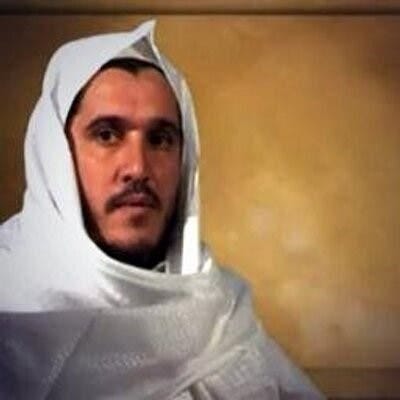
Atiyatullah al-Libi aka Atiyah Abdul-Rahman of the LIFG and Al Qaida Central
In early 2012, an “Abdul-Ghani Mazuz” published a history of the Libyan Islamic Fighting Group (LIFG). He traces its origins among Libyan foreign fighters in the Soviet-Afghan War through its insurgency against the Muammar Gaddafi government in Libya until its role in the Libyan Arab Spring. The most notable details pertain to the LIFG’s relations with the global jihadist movement, in particular: Egyptian Islamic Jihad, the Umar al-Bashir regime in Sudan, Groupe Islamique Armé in Algeria, and lastly Al Qaida in Afghanistan. To be precise, a splinter of LIFG had close relations and ultimately merged with AQ. This splinter had the most famous and influential LIFG figures: Abu al-Layth al-Libi, Abu Yahya al-Libi, Atiyatullah al-Libi (aka al-Misrati), and Abu al-Faraj al-Libi. The non-AQ splinter retained the LIFG name and officially abandoned militancy in 2007 to enter talks with the Libyan government. For the next few years, it became a quietest organization but this soon changed. In 2011, the LIFG returned under a new name to lead rebel operations against the Gaddafi regime.
Abdul-Ghani Mazuz also describes the LIFG’s organizational structure, its ideology, and its combat methodology. Much of this is standard jihadism, but there is a notable difference between the LIFG and Salafi Jihadists: its tactics. The group’s literature makes no mention of infamous methods such as taking human shields, major raids, mass casualty attacks, and disregarding collateral damage. The absence of these tactics from LIFG’s repertoire explains why the Libyan AQ chiefs tended to be the most conscious about avoiding civilian casualties and generally accommodating civilian populations. These same instincts motivated their horror at the abuses that several jihadist movements inflicted upon civilians–whether it be the Zarqawists in Iraq, Al Shabaab in Somalia, or the old TTP in KPK. In the Abbottabad Files, a recurring motif is the various Libyan leaders’ (especially Atiyatullah’s) unsuccessful efforts to moderate these movements. Although not said explicitly in the files, it is quite clear that their failures weighed heavily on them.
Anecdotally, I once heard a story about an Uzbek jihadist group in Waziristan. This group had set up an ambush on a Pakistani Army patrol. They waited many long hours, but the patrol never arrived. The Uzbek fighters vented their frustration by firing upon a random convoy of civilian vehicles, killing most inside. When this information was conveyed to Abu Yahya al-Libi, he reportedly covered his ears in disgust and said “I don’t want to hear about these renegades.” Little surprise that the Uzbeks were perhaps the most detested foreign fighters in KPK in those days. At one point, even TTP leader Hakimullah Mehsud (himself a deranged extremist) attacked the Uzbek fighters and ordered their expulsion from an area because they had crossed the final line–namely, demanding that local women and girls be provided to them. Still today, the Libyan AQ chiefs are revered among a certain segment of jihadists who are unnerved by abuses against Muslim civilians.
History
It began from the House of the Supporters [Bayt al-Ansar] that Usama bin Ladin took as a foundation to shelter Arab volunteers, and it ended at the House of Resilience [Bayt al-Sumud] in the Bab al-Aziziya complex. Between these two houses, the Fighting Group lived two complete decades of confrontation and clash, punctuated by periods of detention, exiles, and assassinations–ebb and flow with Gaddafi’s regime and a dramatic saga whose final chapters were written under the title “Operation Dawn of the Bride of the Sea.”
So what is the Libyan Islamic Fighting Group? Who are its founders and key figures? What is its organizational and ideology? What is its relationship with Al Qaida? And what was its role in the February 17 Revolution?
As with the other jihadist groups and organizations that formed during the Soviet invasion of Afghanistan, the Libyan Fighting Group was the organizational framework which gathered most Libyan volunteers who came to join the Afghan jihad–one, let us add, that was launched with the blessing and support of most Arab and Western states.
Before the Libyan Fighting Group, Libyan lands had witnessed the emergence of several organizations with jihadist orientation in the early eighties, most prominently the group of Shaykh Ashabi, founded in 1982. The Harakat al-Jihad, founded by Awadh al-Zawi, also appeared in the late eighties, and in the same year the Harakat al-Shuhada al-Islamiya was established under the leadership of Muhammad al-Muhashimi.
After the end of the Soviet occupation of Afghanistan, the first nucleus of the Libyan Islamic Fighting Group (LIFG) was formed (c. 1989–92), which secured for itself its own guesthouses and camps, just like most of the Islamist groups present on Afghan soil. The founding of the Fighting Group was influenced by the spread of the ideology of the Egyptian Islamic Group [aka Egyptian Islamic Jihad] among the Arab Afghans. This led most of them to establish cells and jihadist gatherings modeled after the Egyptian Islamic Group.
The goal of founding the Libyan Islamic Fighting Group was to return to Libya and fight the regime of Colonel Muammar Gaddafi to overthrow it, and to establish Islamic rule according to the Group’s published literature.
After the completion of the Soviet withdrawal from Afghanistan, there came the civil war between the Afghan parties, and then the beginning of campaigns of arrest and pursuit against those called the “Arab Afghans,” especially in Pakistan. Most of them returned to their original countries, and for those whose security circumstances did not permit their return to their homelands, to the havens of refuge in Europe. Amidst this, most members and leaders of the LIFG moved to Sudan, benefiting from the facilities granted to them by the Umar al-Bashir regime and his ally in power, Hassan al-Turabi. The presence of the Fighting Group in Sudan was an important point in its history, as it enabled it to rehabilitate its cadres and train new competencies in the fields that concerned the Group, especially the military and sharia domains. It also enabled it to observe closely the situation in Libya and strengthen its ties with the jihadists within the country. But this period did not last long, as the regime of Colonel Muammar Gaddafi and the regime of Lieutenant General Umar al-Bashir soon reached an agreement to exchange criminals. Thus, the Sudanese authorities ordered all elements of the Fighting Group to leave the country, prompting them to disperse across a number of Maghrib, Gulf, and European countries, such as Algeria, Mauritania, Saudi Arabia, Yemen, Turkey, Syria, and Jordan.
After the military’s coup against the results of the legislative elections in Algeria–which were swept by the Islamic Salvation Front–and the beginning of armed conflict between the Islamists and the authorities in Algeria, the LIFG had a presence in this conflict alongside the Armed Islamic Group [aka Groupe Islamique Armé, GIA] led by Abu Abdul-Rahman Amin. But this cooperation did not last long, as the LIFG soon disavowed the GIA after the great deviation that befell it, which ended with it targeting innocents and civilians and committing horrific crimes against them. Members of the LIFG were not spared from the killing and targeting that the GIA committed against all its opponents, under the pretext that they were not upon the pure Salafi creed.
Meanwhile, on Libyan soil, the Fighting Group maintained the secrecy of its work and set for itself a program to overthrow the regime. This program did not rely on small skirmishes and bombings here and there, but rather sought to adopt a plan based either on the physical liquidation of the regime’s figures, foremost among them Colonel Muammar Gaddafi, or leading a rebellion and coup within the Libyan Army. Alongside this plan, the Group put in place a contingency plan to be activated if any of its cells were discovered, as transpired in 1995 when Libyan security discovered a Group cell while raiding a farm in the outskirts of Benghazi. The Group was forced to come out into the open and issue its first statement dated 17 October, 1995. It then activated the contingency plan, and many armed clashes erupted between the Group and the regime in many areas in Libyan territory. This ended with the Group changing its strategy in confronting the regime, which it expressed in its statements as “strategic offensive and tactical retreat.” Its military activity was limited to a number of assassination attempts against the Libyan Colonel Muammar Gaddafi, all of which ended in failure.
After the Taliban extended its control over most Afghan territories and declared the establishment of an Islamic Emirate, jihadists from all corners of the world hastened to the fold of this newborn Emirate. However, the Fighting Group had a different opinion–it rejected the gathering of all jihadist organizations in one arena. But the group did not hold firm to this opinion, for it retracted it after dialogues with jihadist groups and figures. These ended with the Fighting Group’s return to Afghanistan and the acquisition of a camp of its own. The late leader of Al Qaida, Usama bin Ladin, attempted to draw the Group to the Islamic Front for Jihad Against the Jews and Crusaders, which he founded with Ayman al-Zawahiri at the end of the nineties. He did not succeed in this, as the Fighting Group insisted on preserving its organizational and administrative independence and its sharia choices, away from Al Qaida or the Islamic Front.
After the events of September 11 and the American invasion of Afghanistan, the LIFG entered the battle to defend the crumbling Taliban regime, fighting fierce battles on the northern Kabul lines and on the southern front in Kandahar and Helmand. After the fall of the Taliban regime and the completion of the occupation of Afghanistan, the LIFG suffered heavy losses at the level of leaders and members. This phase culminated in the dispersal of the group’s members and their escape to Pakistan and other countries, while a group of them remained under the leadership of Abu al-Layth al-Libi fighting the American forces in the areas adjacent to Pakistan. This phase also witnessed the capture and imprisonment of many leaders and members of the Group, some of whom were handed over to the Libyan authorities. At their head is the Group’s emir Abu Abdullah al-Saddiq, whose real name is Abdul-Hakim Belhaj, who is now [in 2012] the president of the Military Council of the Tripoli Revolutionaries and one of the leaders of Operation Dawn of the Bride of the Sea.
The Most Important Figures and Founders
Throughout its movement history, the Fighting Group witnessed the emergence of members and leaders within its ranks who had the greatest weight in its Sharia, organizational, and strategic choices. They succeeded in keeping the group alive and preventing its complete extinction, given the series of blows it received during its journey. Among the most famous of these figures and leaders, in addition to the early founders about whom not much is known (like the commander Abdul-Rahman Khattab) were:
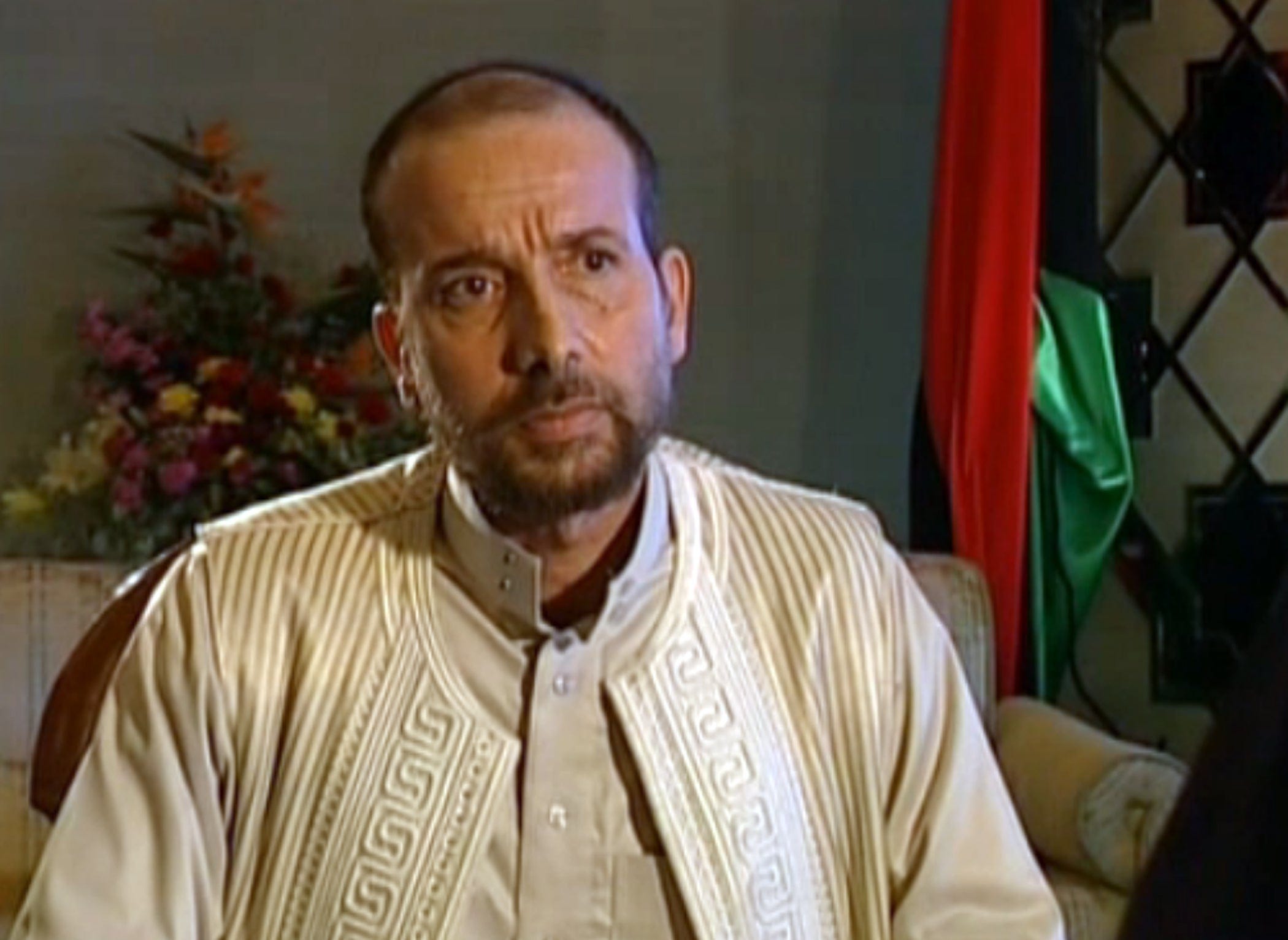
Abu al-Mundhir Sami al-Sa’adi, who is considered the Group’s sharia mufti and one of the first sharia theorists. He defined its jurisprudential and methodological choices and wrote studies in this regard, most notably “Broad Outlines in the Methodology of the Libyan Islamic Fighting Group.” He is one of the most prominent signatories of the jurisprudential revisions announced by the group. He was arrested in Hong Kong and handed over to the Libyan authorities.
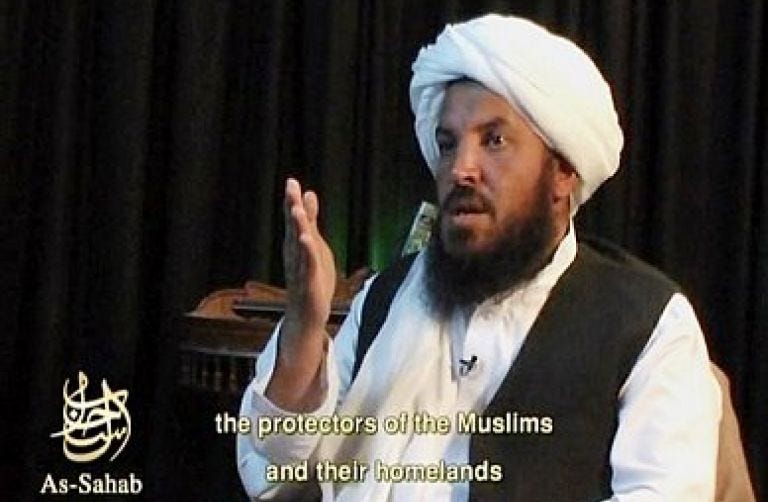
Abu al-Layth al-Libi, whose real name is Ammar al-Ruqai’i. He was one of the most important figures of the Fighting Group and the commander of its battles against American forces in Afghanistan. He announced his joining of Al Qaida in November 2007, and As-Sahab Foundation, the media arm of Al Qaida, published a series of messages and speeches by him. He was detained in al-Ruways prison in the Kingdom of Saudi Arabia, but he managed to escape from it and rejoin his comrades in Afghanistan. He was killed on 29 January, 2008, in North Waziristan in an attack launched by an American drone on a house where he was residing.
Abu Yahya al-Libi, also known as Hassan Qa’id. He is one of the most prolific members of the group in terms of writing and output, having written dozens of books and articles, in addition to dozens of video and audio recordings periodically published by As-Sahab. He now holds the position of sharia mufti for Al Qaida. He was detained after the American invasion of Afghanistan at the heavily fortified Bagram base, but he managed to escape and return to his activities. The last thing published by him was the book “The Divinely Inspired and the March of Victory” and a visual address titled “To Our People in Libya” in which he praises the February 17 Revolution.
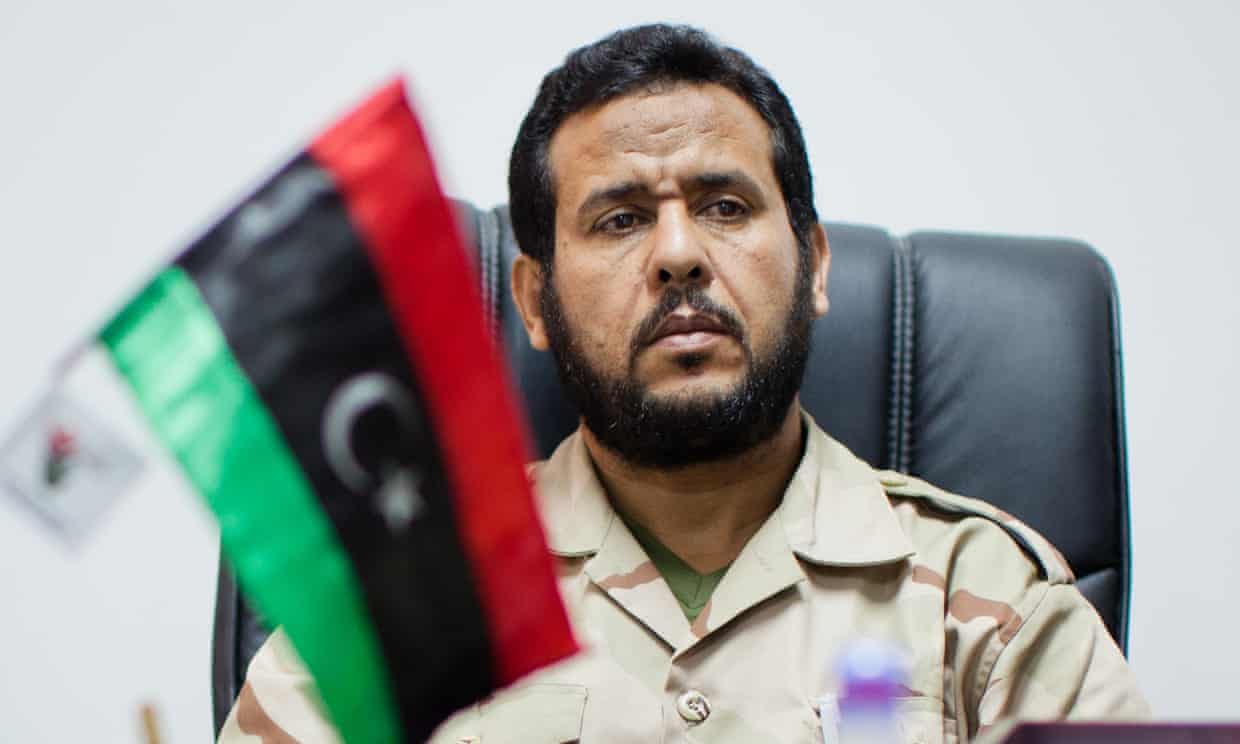
Abdul-Hakim Belhaj, or Abu Abdullah al-Saddiq. Born in 1966, he obtained a degree in civil engineering and traveled to Afghanistan in 1988 to witness the Soviet withdrawal from Afghanistan. He returned to Libya again before leaving it as confrontations with the Gaddafi regime intensified, returning once more to Afghanistan. He was pledged allegiance as emir of the LIFG. After the events of September 11 and America’s invasion of Afghanistan, he was among the leaders who fled to neighboring countries, so he was arrested in Malaysia and transferred to Thailand for interrogation by American forces. After it became clear that he had no relationship with Al Qaida, he was deported to Libya to remain confined in Abu Salim prison in the capital Tripoli, until he was released in 2010 along with dozens of other Group elements. This followed a series of dialogues with the authorities sponsored by the Gaddafi Foundation for Charitable Works run by Saif al-Islam Gaddafi. These dialogues resulted in the Group’s announcement of its jurisprudential and methodological revisions. The dialogues were mediated by a number of Libyan figures, most notably Dr. Ali al-Sallabi, a member of the International Union of Muslim Scholars.
Abdul-Hakim Belhaj, who is known in jihadist circles as Abu Abdullah al-Saddiq–the name he used to sign his writings and statements–is the brother of the sharia mufti and the second-in-command in Al Qaida, Abu Yahya al-Libi (Hassan Qa’id). He is considered among the most vehement opponents of the idea of the Fighting Group joining Al Qaida. Recently, he received significant media attention as the leader of the revolutionaries in Tripoli and its liberator from the grip of Colonel Gaddafi. He has demanded that Washington and London apologize to him for his arrest and handover to the Libyan authorities in 2004, who imprisoned him in the notorious Abu Salim prison.
Alongside these figures, there was another group of leaders and thinkers who had great influence on the Group’s choices and the management of its bitter conflict. However, most of them merged into Al Qaida and formed intellectual and strategic pillars for it, like Atiyatullah al-Misrati [aka Atiyatullah al-Libi] (before he was recently assassinated by a drone), whose star rose after the killing of the third man in Al Qaida, Mustafa Abu al-Yazid, and Abu al-Faraj al-Libi, who is among the detained leaders of Al Qaida.

Mustafa Abu al-Yazid
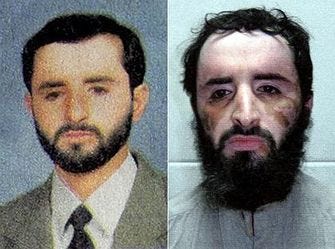
Abu al-Faraj al-Libi
Organizational Structure
The Libyan Islamic Fighting Group emerged in the same context as most Islamic groups that adopted the option of armed confrontation with regimes. Its existence represented a primitive or initial formula for these groups, whether in terms of ideology, intellectual and Sharia backgrounds; of the strategy of confrontation with regimes; or of the organizational structure or administrative framework of these groups, before the strategy of these organizations evolved and they undertook a kind of updating or modernization of their general structure, reproducing themselves according to constantly changing circumstances. For example, the environment of work and confrontation fostered by the existence of two struggling global poles is not the same as the environment under unipolarity. Therefore, the LIFG can be considered a replication of most jihadist groups that were active across the Arab and Islamic world in terms of organizational structure.
The organizational structure was a hierarchy consisting of the emir and his deputy or deputies and a shura council, a sharia committee and a media committee, then the military wing and the political bureau in some cases. The military wing and the Sharia committee form the main pillars of these groups. From the military wing, a number of committees and cells with different specializations branch out. The same applies to the sharia committee, from which other organs and branches branch out. For example, the sharia committee of the Fighting Group consists of a “studies and research” branch, a “fatwas and judiciary” branch, and a “guidance and counseling” branch. As for the media aspect, it relies primarily on the bulletins and periodicals that the Group issues, like al-Fajr magazine, and some websites like the “al-Muqatila” website, (which was closed years ago), in addition to the media activity carried out by the official spokesman on behalf of the Group, as is the case with its official spokesman Umar Rashid.
Armed Islamic groups did not maintain this administrative structure. They moved beyond it due to the changing regional and international climate for these groups, the internationalization of the war against them, and the globalization of their struggle. They moved from operating according to the hierarchical pattern to operating through small cells independent of each other, after the first pattern proved its military and security failure and the second proved its effectiveness.
Ideology
The intellectual and jurisprudential output of the Fighting Group is not only the sharia and creedal justification for its activity and existence. Rather, some other studies and research issued by groups and individuals not belonging to the Fighting Group can be considered an ideological and intellectual extension of it. The writings of Abu al-A’la Mawdudi, Sayyid Qutb, and Sa’id Hawwa, as well as the literature of Ibn Taymiyya and Ibn Qayyim, can be considered the intellectual ground or raw material that jihadists succeeded in reformulating according to the concepts and theories they adopt and defend. It is known that the Libyan Fighting Group relied on studies circulating in the arena at that time, like the book “The Neglected Duty” by Abdul-Salam Faraj, the writings of the Azharite Dr. Umar Abdul-Rahman [aka the Blind Shaykh], and the writings of Dr. Sayyid Imam, known as Abdul-Qadir ibn Abdul-Aziz.
Returning to the studies and research issued by the Group and using them to determine the intellectual identity and sharia grounding of the LIFG, we find concepts such as: Hakimiyyah (God’s sovereignty), al-Ta’ifa al-Mumtan’ah (lit. “the defiant group,” or the community that refuses to implement Sharia), Hukam al-Jawr (the unjust rulers), al-‘Almaniya (secularism), Khilafa (caliphate), al-Sa’il (the aggressor), al-Wala’ wal-Bara’ (loyalty and disavowal), al-Jama’a (the group or community), Jihad... These concepts are important for understanding the intellectual composition of the LIFG and all other jihadist groups. No jihadist group can present an intellectual or jurisprudential proposal without relying on some or all of these concepts.
For the Fighting Group, we find that among its most important published literature is the book “Broad Outlines of the Methodology of the Islamic Fighting Group” by Abu al-Mundhir al-Sa’adi, who attempted to link the legitimacy of the Group’s existence to some of those concepts. He opened his book with the legitimacy of collective action, the limits of hearing and obeying the ruler, the importance of jihad and military preparation, a discussion about secular rulers, and a final discussion about the obligation to rule by what God has revealed.
These are the justifications defined by the general context of the emergence of the LIFG and other armed Islamic groups. As for the specific or local context, it can be extracted from an article published by the Group titled “The Sharia and Realistic Justifications for the Emergence of the Islamic Fighting Group,” which considered Gaddafi’s existence with “his deviations” and “his blasphemies” a sharia justification for fighting and confrontation with his regime because, according to the article:
He dared to corrupt the Book of God, Blessed and Exalted.
His denial of the Prophetic Sunnah.
His denial of the universality of the Prophet’s message.
Exclusion of Sharia from ruling among people.
His mockery of Islamic creeds and rituals, like the Hajj, for example.
These positions that the article mentioned in some detail are, in its view, sharia and realistic justifications for the emergence of the Libyan Islamic Fighting Group.
But it is very important that we point out in this context that the jurisprudential and methodological approach adopted by the Fighting Group is not a copy of thos groups called jihadist Salafism, especially the Al Qaida organization and its branches. Yes, there are overlaps at the level of some concepts and convictions, but the gap between them seems vast at the level of analyzing and dealing with reality. For example, we notice the absence of some concepts that form the backbone of the Salafi Jihadist current from the literature of the Libyan Fighting Group, such as: al-Igharah (raiding/assault), al-Tatarrus (using human shields), al-qital bima ya’am itlafah (fighting with what causes indiscriminate destruction) [referring to mass casualty and highly destructive attacks], ma la yajuz qasdan yajuz tab’an (what is not permissible intentionally is permissible accidentally) [referring to collateral damage, especially civilian casualties], among other concepts.
In general, the sharia and intellectual background of the Fighting Group can be considered a fusion of Muslim Brotherhood thought and Salafi thought. This fusion is termed Sururi thought, from Muhammad Surur, the well-known jihadist thinker, and the ideology of the Fighting Group is closer to the ideology of the Islamic Army Group in Iraq.
Its Relationship with Al Qaida
Early on, Al Qaida attempted to win over the LIFG, but did not succeed. Abdul-Hakim Belhaj is considered among the most prominent opponents of this step. Al Qaida’s senior ideologue, Abu Mus’ab al-Suri, acknowledged that Usama bin Ladin failed in his efforts to incorporate the LIFG into the front he founded with Dr. Ayman al-Zawahiri in the late nineties. However, the Group suffered splits due to the developments that befell it while in Afghanistan after the American intervention, particularly the pursuit of Arab elements on suspicion of belonging to Al Qaida.
Some leaders and elements left Afghanistan and dispersed in exiles and diaspora, some were arrested, and some remained in hiding. Meanwhile another number of the Group’s leaders and members remained on Afghan soil to combat the international Coalition forces and defend the Taliban regime. This remaining group in Afghanistan, which was led by Ammar al-Ruqai’i aka Abu al-Layth al-Libi, pledged loyalty to Al Qaida in November 2007. Ayman al-Zawahiri blessed this pledge and considered a step on the right path. However, a number of the Group’s leaders and shaykhs rejected this joining.
Ideological and Methodological Revisions of the LIFG
From the founding of the Libyan Islamic Fighting Group until shortly before the start of dialogue and reconciliation sessions in Libyan prisons with the Libyan regime, the position of the Fighting Group was rigid in rejecting of any idea of dialogue with the regime. But starting in 2007, the Fighting Group began its reformist revisionist project, and dialogue with the regime began, which were sponsored by the Gaddafi Foundation for Charitable Works, headed by Saif al-Islam. Scholars and thinkers mediated the dialogue, most prominently Dr. Ali al-Sallabi, a member of the International Union of Muslim Scholars.
These dialogues were crowned by the Fighting Group’s issuance of a large book containing its corrective revisions under the title “Corrective Studies in the Concepts of Jihad, Hisbah, and Judging People.” These revisions are considered a complete break of the Fighting Group from all its previous convictions. The revisions concerned issues such as rebelling against rulers, takfir, the legitimacy of armed clash with regimes, and other such issues. The group considered that throughout Islamic history, rebelling against rulers had only been a cause of strife, creating disasters and tragedies, starting from the rising of Imam Husayn against Yazid bin Muawiyah in 63 AH to our present day. The group considered its new mission to be engaging in projects of renaissance, development, and construction. After these corrective studies were approved and signed by the most prominent leaders inside Libya, such as the group’s emir Abdul-Hakim Belhaj and its sharia mufti Abu al-Mundhir al-Sa’adi, the Libyan authorities released most of its members from prisons in 2010. The Group also apologized to the Libyan leader Muammar Gaddafi for the assassination attempts against him.
Its Role in the February 17 Revolution
There was an overwhelming and clear Islamic presence in the activities of the Libyan Revolution. Islamists of all stripes were involved in the revolution from the start, forming a strike force with its weight within the opposition forces under the umbrella of the National Transitional Council. Abdul-Hakim Belhaj acknowledged his role in bringing weapons and equipment by sea into Libyan territory, and in training opposition elements in Benghazi and the Western Mountain, given his long experience in such wars. Despite the absence of the name “Libyan Islamic Fighting Group” from circulation throughout the past period and its presence under a new name, “the Islamic Movement for Change,” the traces of its presence on the field appear clear through some slogans and names.
Lastly, the elements of the Libyan Fighting Group had the decisive role in delivering the final blow to the regime of the Libyan Colonel Muammar Gaddafi, with the liberation of Tripoli and the entry of some former Fighting Group elements, led by their emir Abdul-Hakim Belhaj, into the Bab al-Aziziya complex, where the House of Resilience [Bayt al-Sumud]–the symbol of Gaddafi’s power and might–stood. A scene that the world followed closely on its screens.
The Military Council of the Tripoli revolutionaries, under the leadership of Abdul-Hakim Belhaj, remains the body authorized by the National Transitional Council to maintain security and stability in Tripoli.
Written by:
Abdul-Ghani Mazuz
Unfortunately, Abdul-Hakim Belhaj was basically an incompetent version of Al-Jolani. He ended not only watering down his ideology and forming a normie ikhwani party, but his military council getting completely overtaken by non-ideological mafia esque kingpins (Gheniwa al-Kakli and Hashim al-Bishr) and Madkhali groups (The Qadouri brothers and Abdelraof Kara).
Today he is an overweight businessman who lost all military clout he had in Tripoli. The danger of watering down ones ideology. A similar degeneration into criminality occurred in the city of Al-Zawiya where the groups influenced by the "Sururi Salafi" Abu Obeidah al-Zawi ended up fragmenting into drug dealing infighting gangs.